The Electric Revolution in German Manufacturing
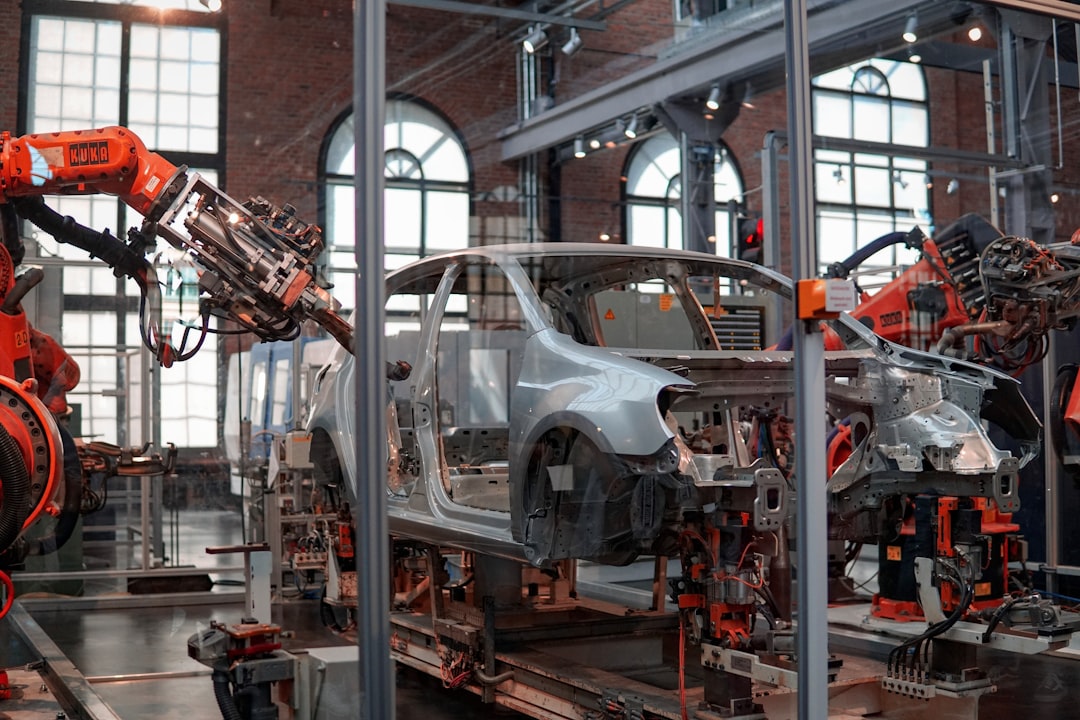
Germany's automotive industry stands at a pivotal crossroads. After more than a century of combustion engine dominance, the nation's manufacturing powerhouses are executing one of the most ambitious industrial transformations in modern history. The shift toward electric mobility represents not merely a technological upgrade but a fundamental reimagining of automotive design, production, and infrastructure.
The Scale of Investment
German automakers have committed unprecedented resources to electric vehicle development. Volkswagen Group alone has pledged over 89 billion euros through 2026 for electric and digital technologies. BMW announced 30 billion euros in EV investments through 2025, while Mercedes-Benz committed to spend 40 billion euros on battery electric vehicles by 2030. These figures dwarf previous automotive development budgets and signal an irreversible commitment to electrification.
This capital deployment extends beyond vehicle engineering. Manufacturers are constructing massive battery production facilities, partnering with energy companies to secure raw materials, and developing proprietary battery chemistries. The Volkswagen Group's PowerCo subsidiary aims to operate six battery cell factories with 240 GWh annual capacity by 2030. BMW secured long-term lithium supply contracts worth billions, ensuring material availability for the next decade.
Battery Technology Breakthroughs
The heart of any electric vehicle is its battery pack, and German manufacturers are pursuing multiple technological pathways simultaneously. Current lithium-ion batteries deliver energy densities around 250-300 Wh/kg, enabling ranges of 400-600 kilometers. However, next-generation solid-state batteries promise energy densities exceeding 400 Wh/kg, potentially doubling vehicle range while reducing charging times to under 15 minutes.
Mercedes-Benz partnered with ProLogium to develop solid-state technology targeting commercial deployment by 2027. Volkswagen invested in QuantumScape, a California startup developing ceramic separator technology. BMW collaborates with Solid Power on sulfide-based solid-state cells. These partnerships reflect a pragmatic approach: develop proprietary technologies while maintaining multiple supplier relationships to mitigate technical and supply chain risks.
German research institutions contribute significantly to battery innovation. The Fraunhofer Institute for Chemical Technology develops production processes for next-generation cells. The Karlsruhe Institute of Technology researches silicon anodes that could increase energy density by 20-30 percent. University partnerships ensure that theoretical breakthroughs transition rapidly to industrial application.
Manufacturing Process Innovation
Electric vehicles require fundamentally different manufacturing approaches compared to internal combustion vehicles. Traditional powertrains contain thousands of precisely machined components assembled through complex supply chains. Electric drivetrains feature far fewer parts, shifting manufacturing emphasis from mechanical assembly to battery pack integration and electrical system calibration.
This simplification creates opportunities for production efficiency gains. Tesla demonstrated that dedicated EV platforms could achieve faster assembly times and higher quality metrics than adapted combustion platforms. German manufacturers learned these lessons, designing purpose-built electric architectures. Volkswagen's MEB platform, Mercedes' EVA2 architecture, and BMW's Neue Klasse represent clean-sheet designs optimized for electric propulsion.
The transition challenges traditional supplier relationships. Internal combustion powertrains generated substantial revenue for German parts manufacturers like Bosch, Continental, and ZF. Electric drivetrains require different components: power electronics, electric motors, thermal management systems. Suppliers are investing billions to develop electric competencies, but the transition period creates uncertainty about future revenue streams and employment levels.
Charging Infrastructure Development
Vehicle technology advances mean little without adequate charging infrastructure. Germany has made substantial progress, with over 70,000 public charging points operational as of early 2025. However, the Federal Network Agency projects Germany needs 1 million public charging points by 2030 to support the planned 15 million electric vehicles on German roads.
High-power charging networks are expanding rapidly. Ionity, a joint venture of BMW, Mercedes, Ford, Hyundai, and Volkswagen, operates over 400 charging parks with 350 kW chargers across Europe. These stations enable 80 percent charges in approximately 20 minutes for compatible vehicles. Private networks from Tesla, Fastned, and EnBW complement the Ionity infrastructure.
The German government supports infrastructure development through multiple mechanisms. The Charging Infrastructure Master Plan allocates 6.3 billion euros through 2030 for public charging expansion. Subsidies cover up to 80 percent of installation costs for certain charging types. Regulatory requirements mandate charging infrastructure in new residential and commercial buildings, ensuring long-term capacity growth.
Market Adoption Trends
Consumer acceptance of electric vehicles has accelerated dramatically. Battery electric vehicles represented 18.4 percent of new German passenger car registrations in 2024, up from 13.5 percent in 2023. Including plug-in hybrids, electrified vehicles accounted for nearly 32 percent of sales. This rapid adoption reflects improving vehicle choices, expanding charging networks, and strong government incentives.
Fleet buyers are driving significant demand. German corporate car policies traditionally favored premium combustion sedans, but taxation changes now heavily incentivize electric vehicles. Company car drivers pay substantially reduced taxes on EVs compared to equivalent combustion vehicles. Large fleets from telecommunications, logistics, and service industries are rapidly electrifying their vehicle pools.
Price parity with combustion vehicles approaches faster than anticipated. Declining battery costs, manufacturing scale economies, and simplified drivetrains are reducing EV production expenses. Industry analysts project that compact and midsize electric vehicles will achieve purchase price parity with equivalent combustion models by 2026-2027, even without government subsidies. Premium segment parity may arrive even sooner.
Supply Chain Considerations
Electric vehicle production creates new supply chain dependencies. Battery production requires lithium, cobalt, nickel, and rare earth elements, with complex geopolitical implications. China controls much of the global battery supply chain, from raw material refining to cell production. European manufacturers recognize this dependency as a strategic vulnerability requiring urgent mitigation.
Germany is pursuing supply chain diversification through multiple initiatives. The European Battery Alliance coordinates investment in European battery production capacity. German companies are establishing direct relationships with mining operations in Australia, Chile, and Canada. Recycling initiatives aim to recover valuable materials from end-of-life batteries, creating circular supply chains that reduce import dependency.
The Federal Ministry for Economic Affairs supports supply chain resilience through the Important Projects of Common European Interest program. This initiative funds strategic industrial projects, including battery raw material processing facilities and component manufacturing plants. The goal is ensuring that Europe controls at least 30 percent of the global battery supply chain by 2030.
Environmental Impact Assessment
Electric vehicles promise substantial environmental benefits, but comprehensive lifecycle assessment reveals complexity. Battery production generates significant carbon emissions, particularly when powered by fossil fuel electricity. Studies indicate that compact EVs require approximately 15,000-20,000 kilometers of driving before offsetting their higher manufacturing emissions compared to equivalent combustion vehicles.
Germany's grid decarbonization improves EV environmental credentials over time. Renewable energy represented 55 percent of German electricity generation in 2024, up from 42 percent in 2020. As coal plants close and wind and solar capacity expands, the carbon intensity of vehicle charging decreases. By 2030, German EVs will generate approximately 70 percent fewer lifecycle emissions than combustion equivalents, assuming continued grid decarbonization.
Battery recycling closes the environmental loop. Current European regulations require recycling 70 percent of battery mass, with specific recovery rates for cobalt, nickel, and lithium. Next-generation recycling processes achieve over 95 percent material recovery, dramatically reducing the environmental footprint of battery production. Companies like Duesenfeld and Redux Recycling are commercializing advanced recycling technologies in Germany.
Looking Forward
The electric revolution in German automotive manufacturing is entering its acceleration phase. The technological foundations are established, manufacturing capacity is scaling rapidly, and consumer acceptance is growing. Challenges remain around charging infrastructure density, grid capacity, and supply chain security, but momentum appears unstoppable. By 2030, electric vehicles will likely represent the majority of new vehicle sales in Germany, with combustion vehicles relegated to niche applications. The transformation of Germany's automotive sector, while disruptive, positions the industry for continued global leadership in the evolving mobility landscape.